

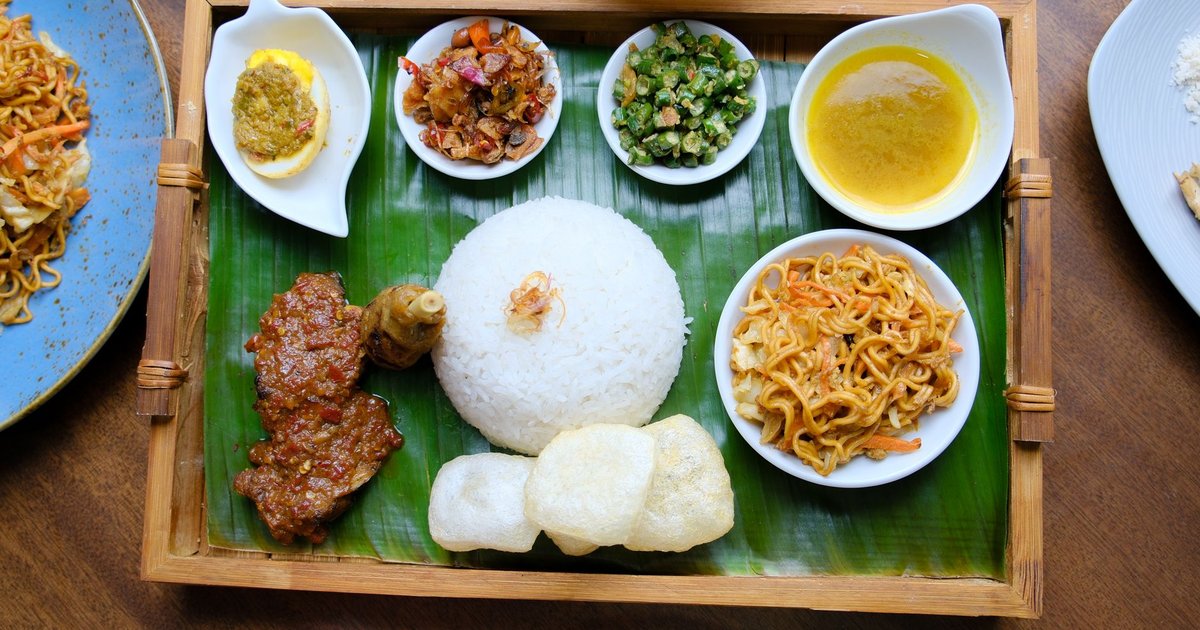
Rendang originates from the Minangkabau people of West Sumatra. It is beef slowly cooked in coconut milk and spices until the liquid reduces and the meat becomes dark and rich.
What makes it special
The long cooking time preserves the meat and develops deep flavor. It is common at ceremonies and festive meals.
Dry vs wet
Dry rendang is cooked until almost no sauce remains. Wetter versions are also common.
How to eat it
With steamed rice and vegetables like cassava leaves.
Tips
Try it in Padang restaurants or at home with a spice paste from local markets.
The cultural meaning of rendang
In Minangkabau culture, rendang is more than a dish. It is often served at important events such as weddings, religious holidays and ceremonies. Some people describe the main ingredients as symbols: meat representing the community leaders, coconut representing intellectuals, chili representing religious scholars, and spices representing the wider community. Rendang has also been recognized as part of Indonesia’s intangible cultural heritage.
Ingredients
Rendang usually includes beef, coconut milk and a spice paste made from shallots, garlic, ginger, galangal, turmeric, lemongrass and chili. Other ingredients may include turmeric leaves, kaffir lime leaves and toasted grated coconut (kerisik) in some recipes. The ingredients are simmered for several hours, stirring regularly.
The cooking process
Rendang begins as a curry-like dish. As it cooks, the liquid evaporates and the coconut milk releases oil, which fries the meat in the spices. A partially cooked version is called kalio, which has more sauce. Fully cooked rendang is dark and dry. This process can take four hours or more.
Variations
- Rendang daging: beef, the most famous version.
- Rendang ayam: chicken.
- Rendang telur: egg-based rendang, often as a snack.
- Rendang jengkol: made with jengkol beans.
- Rendang paru: beef lung.
Different regions in West Sumatra have their own variations.
Cooking rendang at home
If you want to cook rendang, prepare plenty of time. Use beef cuts that can withstand long cooking. Stir regularly to prevent burning, and adjust the spices to your taste. Ready-made spice pastes are available in supermarkets for convenience.
Buying rendang as a souvenir
Packaged rendang is sold in West Sumatra and many cities. Check expiration dates and packaging quality, and follow customs rules if taking it abroad, as some countries restrict meat imports.
Pairing
Serve rendang with rice, cassava leaves, sambal and perkedel for a complete meal. It is also delicious with lontong or ketupat during holidays.
Where to eat rendang
You can find rendang in Padang restaurants across Indonesia, but tasting it in West Sumatra is a special experience. In Padang, Bukittinggi and surrounding towns, restaurants and homes prepare rendang using traditional methods and local ingredients. Look for restaurants that sell rendang in large pots and cook it daily. Some shops specialize in packaged rendang for travelers and offer different meat types and spice levels. Outside Sumatra, many large cities have well-known Padang restaurants with a good reputation for rendang. Ask locals for recommendations. During Eid al-Fitr, many Indonesian families cook rendang at home, so it is also a great time to try homemade versions if you are invited to celebrate with friends.
Key takeaways
- Rendang comes from the Minangkabau people of West Sumatra.
- It is slow-cooked for hours until the coconut milk reduces and the meat darkens.
- Kalio is the wetter, partially cooked version.
FAQ
Is it spicy? Yes, typically.
How long does it last? Dry rendang can keep for several days, but follow food-safety advice.
Why is rendang dark? Long cooking caramelizes the spices and coconut, turning the meat dark brown.
Is rendang the same as curry? It starts like a curry but is cooked much longer until most of the liquid evaporates, giving a drier, richer result.
Can I freeze rendang? Yes, cooked rendang freezes well in airtight containers; reheat gently to keep the meat tender.
Sources and further checking: always confirm current prices, opening hours and entry rules on the official website, e.g. www.indonesia.travel. Details can change.
Featured photo by Fadli Octora Channel on Pexels.