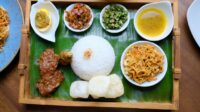

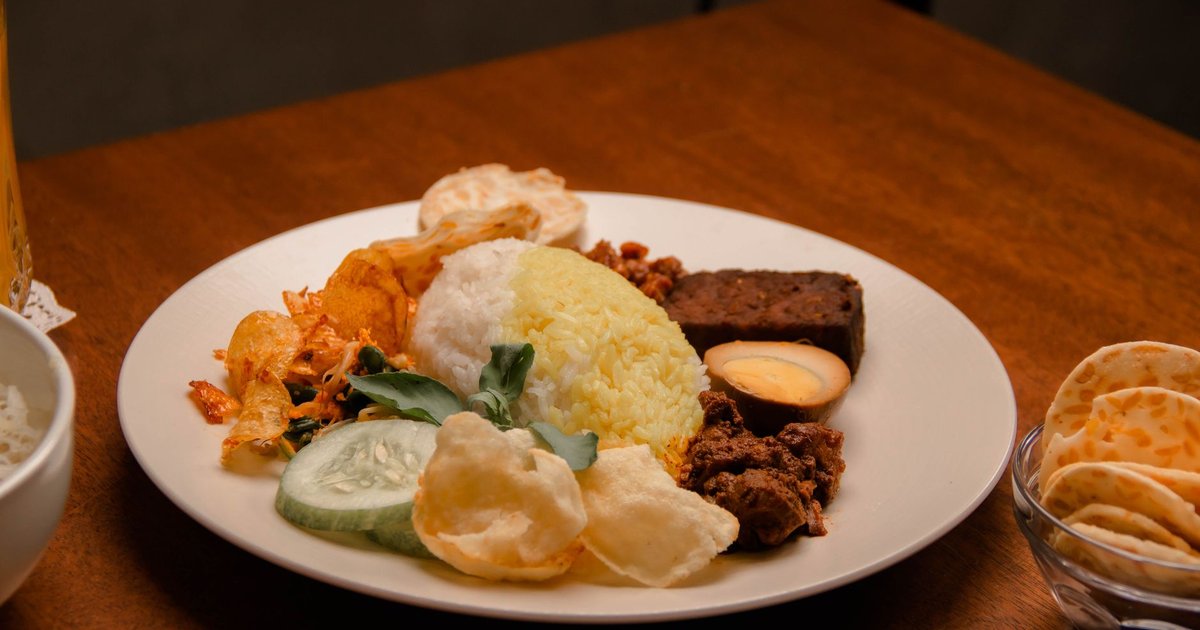
Nasi Padang is a rice meal from the Minangkabau people of West Sumatra, found across Indonesia.
How it works
In the traditional hidang style, waiters bring many small plates to your table. You pay only for the dishes you touch.
What to try
- Rendang, a slow-cooked spiced beef.
- Gulai, a coconut milk curry.
- Sambal ijo, green chili relish.
Tips
Use your right hand if eating with fingers. Ask for a small bowl of water for washing.
The Minangkabau food culture
The Minangkabau of West Sumatra have a rich culinary tradition shaped by spices, coconut and long cooking methods. Their custom of merantau (migrating to seek opportunities) helped spread Padang restaurants throughout Indonesia and abroad. As a result, you can find nasi Padang in almost every Indonesian city, from small stalls to large restaurants.
Hidang vs rames
In the hidang style, the waiter stacks many plates on the table, and you pay for what you eat. In the rames or pesan style, you point at dishes in the display window and your plate is prepared for you. Hidang is a fun experience, while rames is quicker and better for solo diners.
Signature dishes
- Rendang: beef slow-cooked in coconut milk and spices.
- Ayam pop: chicken boiled and lightly fried, pale in color, served with chili sauce.
- Gulai tunjang: curry made with beef tendon.
- Dendeng balado: thin beef slices with chili.
- Gulai ikan: fish curry.
- Sayur nangka: jackfruit curry.
- Perkedel: potato fritters.
- Daun singkong: boiled cassava leaves, often served free.
Sauces and gravies
A special feature of nasi Padang is the gravy poured over the rice. Ask for “kuah campur” to get a mix of curry sauces. Sambal hijau (green chili) and sambal merah (red chili) are common condiments.
Takeaway culture
When you buy nasi Padang to take away (bungkus), the portion of rice is often larger than when eating in. This has become a popular joke among Indonesians, though practices vary by restaurant.
How to eat
Many people eat nasi Padang with their hands, using the right hand. A small bowl of water with lime may be provided for washing. Cutlery is always available if you prefer.
Budget tips
Prices depend on the dishes you choose. Rendang and specific meats are more expensive, while vegetables and eggs are cheaper. Ask about prices if you are unsure.
Finding a good Padang restaurant
Padang restaurants are everywhere in Indonesia, but quality varies. Look for busy places with a fast turnover of food, which keeps dishes fresh. A full, well-arranged display window is a good sign. Restaurants run by families from West Sumatra often have recipes passed down through generations. Some famous chains have branches in many cities, while small local eateries may offer equally delicious food at lower prices. If you visit West Sumatra itself, try the food in Padang and Bukittinggi, where you can taste regional specialties not always found elsewhere, such as sate Padang and nasi kapau. Ask locals for their favorite places, and do not be afraid to try dishes you do not recognize; the staff will usually be happy to explain what each one is.
Key takeaways
- In hidang style you only pay for the dishes you eat from.
- Rendang, ayam pop and gulai are classic choices.
- Ask for kuah campur to get a mix of gravies over your rice.
FAQ
Is it spicy? Many dishes are; ask for less spicy ones.
Is it halal? Generally yes.
Is there a vegetarian option? Vegetable dishes exist, but many are cooked with meat or fish broth; ask the staff.
What is the difference between Padang and Minang food? “Padang” is the common name used across Indonesia, while “Minang” refers to the Minangkabau culture the food comes from.
Do I have to pay for every dish served? In hidang style you only pay for dishes you eat from; untouched plates are returned.
Sources and further checking: always confirm current prices, opening hours and entry rules on the official website, e.g. www.indonesia.travel. Details can change.
Featured photo by Teguh S on Pexels.