

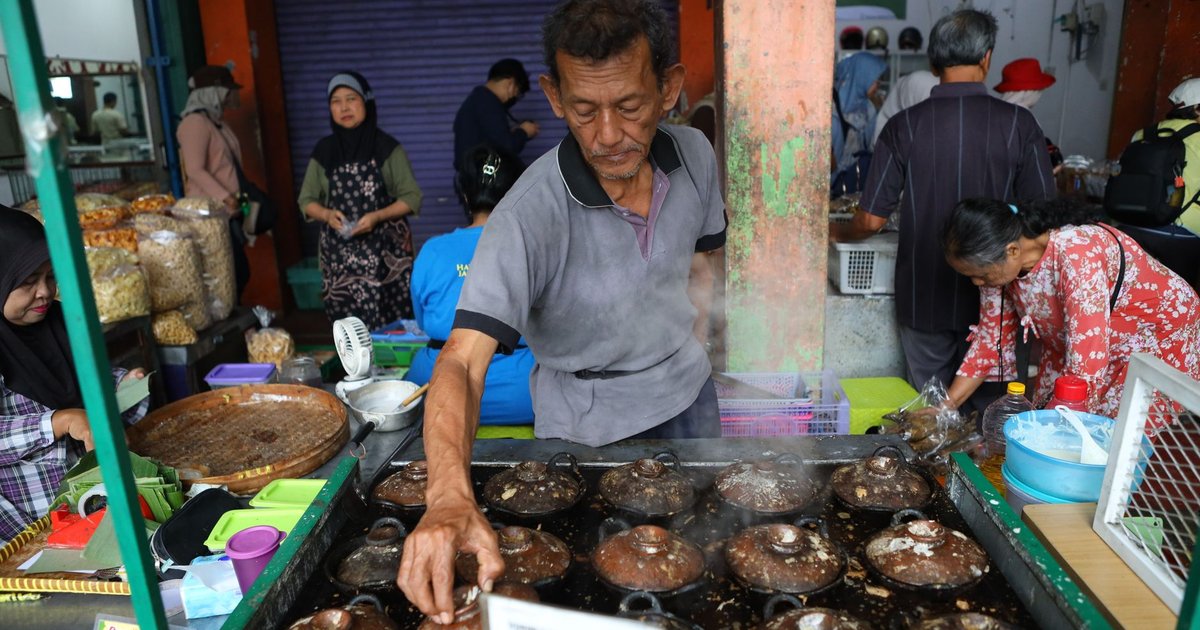
Gudeg is made from young jackfruit simmered for hours with palm sugar and coconut milk until sweet and tender.
What comes with it
Plates often include rice, egg, chicken, krecek (spicy beef skin stew) and sambal.
Wet vs dry
Gudeg basah is moister, while gudeg kering is drier and lasts longer for takeaway.
Where to eat
Look for warungs in the city center and the Wijilan area, known for gudeg vendors.
Tips
Try it at breakfast, when it is freshest. Ask about the spice level if you are sensitive.
The history of gudeg
Gudeg has long been associated with Yogyakarta and the surrounding region of Central Java. It is commonly linked to the abundance of jackfruit trees in the area. Over time, gudeg became so closely tied to the city that Yogyakarta is often called the “City of Gudeg” (Kota Gudeg). Today, it is eaten at all times of day, from early breakfast to late-night meals.
How gudeg is cooked
Young, unripe jackfruit is cut into pieces and slowly cooked with coconut milk, palm sugar, garlic, shallots, galangal, bay leaves and other spices. Teak leaves are sometimes added, which give the dish its characteristic reddish-brown color. The long cooking process can take many hours, allowing the jackfruit to absorb the flavors and become soft.
Accompaniments
- Areh: a thick coconut milk sauce poured over the dish.
- Ayam opor: chicken cooked in coconut milk.
- Telur pindang: eggs cooked in spices until brown.
- Krecek: spicy beef skin stew, which balances the sweetness.
- Tahu and tempe bacem: tofu and tempeh braised in sweet spices.
Regional variations
Gudeg from Yogyakarta is known for its sweetness. Solo has its own version, often wetter and served with more areh. Some versions in other areas are less sweet. Trying gudeg in different places is a good way to appreciate these differences.
Where to try gudeg in Yogyakarta
- Wijilan: a street near the Kraton famous for gudeg restaurants.
- Morning street stalls: some sellers are well known for early morning gudeg.
- Late-night stalls: a few places are known for serving gudeg after dark.
- Restaurants: many offer gudeg as part of a broader Javanese menu.
Taking gudeg home
Gudeg kering is packed in kendil (clay pots) or boxes and can last a little longer than the wet version, making it a popular souvenir. Some sellers offer canned gudeg for longer storage. Follow storage instructions and eat it within the recommended time.
Pairing ideas
Pair gudeg with hot sweet tea or local coffee. For a full Yogyakarta food day, also try bakpia, sate klathak and wedang ronde.
Cooking gudeg at home
If you want to try making gudeg at home, start with young jackfruit, which is available fresh in Indonesian markets or canned in some international stores. Prepare a spice paste of shallots, garlic, candlenuts and coriander. Layer the jackfruit with bay leaves, galangal and teak leaves if available, add coconut milk and palm sugar, and simmer gently for several hours until the liquid has reduced and the jackfruit is tender and dark. Patience is the main ingredient. Serve with rice, eggs, chicken and krecek for a complete meal. Making gudeg at home takes time, but it is a rewarding way to experience one of Yogyakarta’s most beloved dishes and to share it with family and friends.
Key takeaways
- Gudeg is young jackfruit slow-cooked with palm sugar and coconut milk.
- Krecek and sambal balance its sweetness.
- Gudeg kering travels better than the wet version if you want to take some home.
FAQ
Is it vegetarian? The jackfruit is, but the dish is usually served with meat.
Can I take it home? Yes, many vendors pack it in boxes.
Is gudeg too sweet? It is sweet, but krecek and sambal add spice and balance.
Sources and further checking: always confirm current prices, opening hours and entry rules on the official website, e.g. www.indonesia.travel. Details can change.
Featured photo by kevin yung on Pexels.