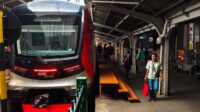

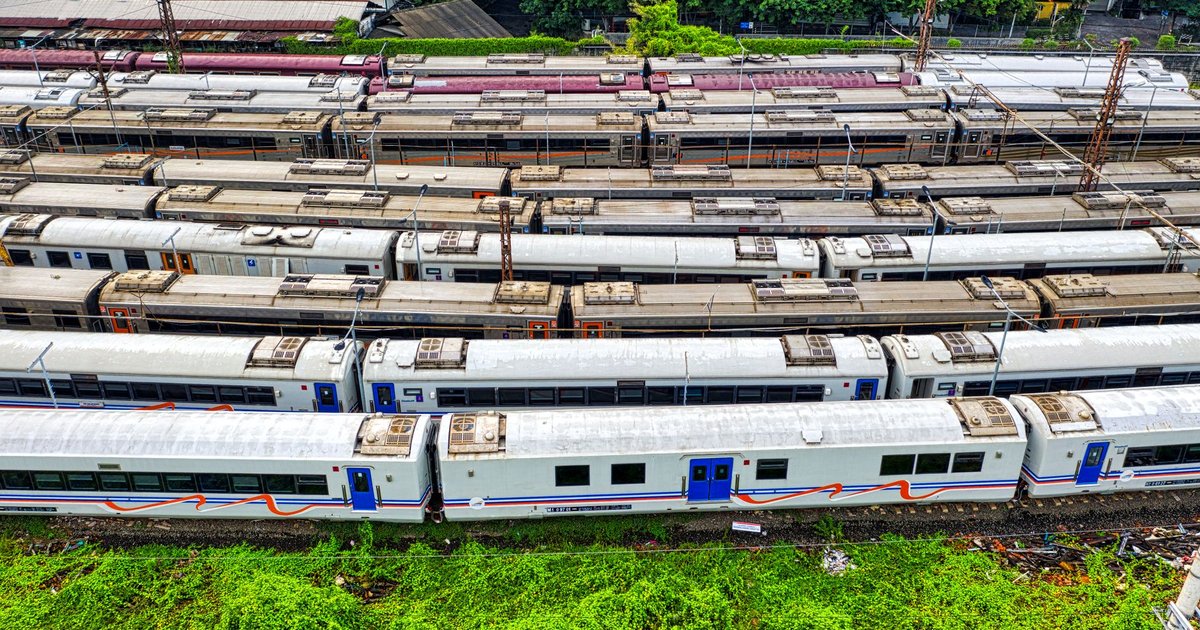
Indonesia’s rail network is operated by PT Kereta Api Indonesia (KAI) and is most developed on Java, with lines also in parts of Sumatra.
Booking
Tickets are sold via the official KAI Access app and website, as well as authorized agents. Book early for holidays.
Classes
Executive, business and economy classes vary in seat comfort and amenities.
Tips
- Arrive at the station early.
- Bring ID that matches your booking.
- Bring a light layer, since air-conditioning can be cold.
Why take the train
It avoids traffic and gives views of rice fields and volcanoes.
Major routes
- Jakarta–Bandung: a scenic route through hills and bridges, with frequent trains. The high-speed rail line also connects the Jakarta area with Bandung.
- Jakarta–Yogyakarta–Solo: popular for culture and heritage trips.
- Jakarta–Semarang–Surabaya: along the north coast.
- Surabaya–Malang: useful for trips to Bromo and East Java’s highlands.
- Sumatra lines: around Medan, Padang, Palembang and Lampung.
Booking tips
Tickets usually open for sale some time in advance, and popular trains sell out quickly before holidays such as Lebaran. Use the official KAI Access app or website to check availability. You will need to enter the ID or passport number of each passenger. Keep your booking code handy for boarding.
Train classes explained
- Executive (Eksekutif): reclining seats, more legroom and power outlets.
- Business (Bisnis): comfortable seats with less space than executive.
- Economy (Ekonomi): more affordable seats; newer economy trains are quite comfortable.
- Luxury and special classes: offered on some routes with extra comfort and amenities.
Boarding process
Arrive at the station early. Some stations use face recognition or ticket scanning at boarding gates. Show your ID if requested. Boarding usually begins a short time before departure.
On board
Trains are air-conditioned, and the temperature can be quite cold, so bring a jacket. There are toilets on board. Many long-distance trains have a restaurant car or attendants selling food and drinks. Keep your belongings safe, particularly at night.
Scenic journeys
The route between Bandung and Jakarta passes through hills and over bridges. Routes through Central Java show rice fields, villages and volcanoes. Sit by the window during daylight for the best views.
Advantages of train travel
Trains are generally punctual, comfortable and avoid road traffic. They are also a more relaxed way to see the countryside and meet people.
Things to know
Smoking is prohibited on trains and in many station areas. Large items and pets may have restrictions. Check KAI’s rules before you travel.
Sample train itinerary across Java
A popular rail journey across Java starts in Jakarta, continues to Bandung for two days of heritage and highlands, then on to Yogyakarta for temples and culture. From Yogyakarta, take a short train ride to Solo to explore royal palaces and batik markets. Continue east to Malang, a cool city that serves as a base for Mount Bromo, and finish in Surabaya, where you can fly home or continue to Bali. This journey can be done in about ten to fourteen days at a comfortable pace. Booking tickets in advance and staying near stations makes connections easier. It is a rewarding way to see the variety of Java’s landscapes, cities and food.
Key takeaways
- KAI trains are comfortable, punctual and avoid road traffic.
- Book early through the official app, especially before holidays.
- Bring a jacket, as carriages can be cold.
FAQ
Is it safe? Yes, with normal precautions.
Can I bring food? Yes, though many trains also sell meals.
Can I change or cancel my ticket? Policies allow changes or cancellations under certain conditions; check the KAI app.
Are there sleeper trains in Indonesia? Some long-distance services offer premium seats with more recline; check KAI’s current options for your route.
Is there Wi-Fi on board? It varies by train; it is safer to rely on your own mobile data.
Sources and further checking: always confirm current prices, opening hours and entry rules on the official website, e.g. www.kai.id. Details can change.
Featured photo by Tom Fisk on Pexels.