
The Bogor Botanical Gardens (Kebun Raya Bogor) were established in 1817 under the Dutch colonial administration, with the German-Dutch botanist Caspar Reinwardt as its founder. Today they are a living collection of tropical plants and one of Bogor’s top attractions.
What to see
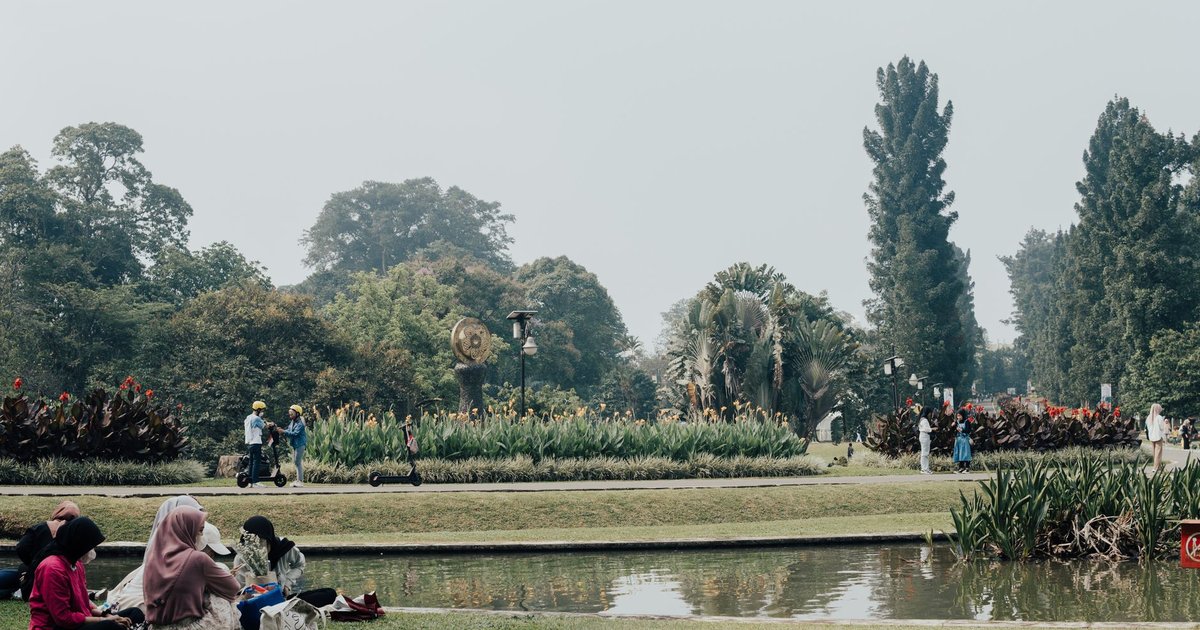
- Tree-lined avenues and ponds.
- The orchid and palm collections.
- Large old trees and open lawns suitable for picnics.
The gardens sit next to the Presidential Palace, which is visible from some points.
Getting there
From Jakarta, take the Commuterline to Bogor Station and continue by a short ride or on foot. By car, expect traffic on weekends.
Best time
Go early in the morning, when the air is cooler and the crowds are thin. Afternoon rain is common, so bring an umbrella.
Practical tips
- Wear comfortable shoes.
- Check opening hours and ticket prices on official channels before you go.
- Bring water and sun protection.
Nearby food
Bogor’s street food is a short walk away. See our culinary guide to Bogor’s soto, asinan and lapis talas.
A short history
The gardens were developed in the grounds of the palace of the Dutch governor-general in Buitenzorg, the colonial name for Bogor. Over two centuries they became a major center for botanical research, with scientists studying tropical plants and introducing crops to other regions. Today the gardens are managed under Indonesia’s national research system and remain an important site for plant conservation as well as public recreation.
Highlights in more detail
- The giant trees: some of the trees in the gardens are very old, with massive buttress roots and trunks.
- Ponds and water lilies: large water lilies and lotus plants grow in the ponds near the palace.
- The orchid house: a collection of tropical orchids, some native to Indonesia.
- Corpse flower: the gardens are known for Amorphophallus titanum, whose rare blooms attract crowds when they occur.
- Historic monuments: small memorials and old structures dotted around the grounds.
Suggested walking route
Enter through the main gate, walk along the avenue to the ponds facing the Presidential Palace, then continue to the orchid house and the large lawns. Take a break at a cafe or shaded bench before exploring the quieter sections. If you have limited time, focus on the area near the palace and the main avenues.
Getting around inside
The gardens are large, and walking can take several hours. Some visitors rent bicycles or use golf-cart style vehicles where available. Check the latest options at the entrance or on official channels.
Photography and etiquette
Respect signs, keep to paths where marked and avoid climbing trees or picking plants. Drones may be restricted, especially near the palace, so check the rules first. Take your trash with you and use the bins provided.
Combining with other sights
After the gardens, you can visit the Zoological Museum if it is open, walk around the old streets of central Bogor, or head to a soto or asinan stall for lunch. With more time, continue to Puncak or Sentul for nature.
Accessibility
Main paths are generally wide and suitable for strollers, but some areas have slopes and uneven ground. Visitors with limited mobility should plan shorter routes and rest breaks.
Planning a full day in Bogor
For a complete day trip, take an early Commuterline from Jakarta and arrive at the gardens as they open. Spend the morning exploring the main avenues, ponds and orchid house. Around midday, head to the Suryakencana area for lunch and a taste of soto kuning or toge goreng. In the afternoon, when rain is likely, visit a cafe or museum, then pick up lapis talas or roti unyil before taking the train back. This simple plan avoids driving and gives you a good overview of the city. Families can extend the visit with a picnic on the lawns, while photographers may want to stay for the soft late-afternoon light if the weather is clear.
FAQ
How long should I spend? Half a day is enough for highlights.
Is it good for kids? Yes, with space to run and many shaded areas.
Is it crowded on weekends? Yes, especially Sunday mornings. Weekdays are calmer.
Sources and further checking: always confirm current prices, opening hours and entry rules on the official website, e.g. www.indonesia.travel. Details can change.
Featured photo by Peter Kambey on Pexels.